Climate Change Alters Camper Travel Behavior
Current booking data from PiNCAMP shows: Campers are reacting to changed climatic conditions. They are switching to cooler destinations and shifting their holidays to spring and autumn.
Rising temperatures and changed climatic conditions are increasingly influencing the travel planning of European campers. The current season analysis by PiNCAMP, the ADAC’s camping portal, evaluates bookings for the travel years 2023 to 2026 and reveals a clear trend: Demand is spreading more strongly throughout the year and across several European regions. While Southern Europe continues to attract the majority of German camping trips, cooler destinations in the north and travel outside the classic summer holidays are gaining importance.
The most important results at a glance
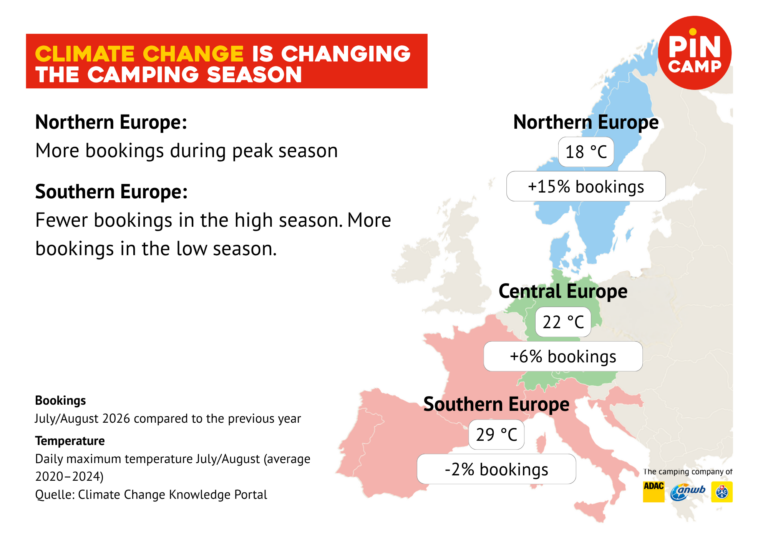
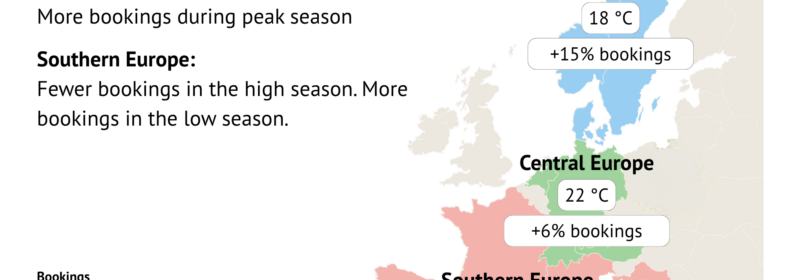
Booking development for camping trips in July/August 2026 compared to the previous year:
- Northern Europe: +15 %
- Central Europe: +6 %
- Southern Europe: -2 %
Southern Europe remains the dream destination – but loses momentum in summer
Despite changed travel habits, Southern Europe remains the dream destination for German campers. France, Italy, Spain, Croatia, and Portugal together account for 67% of the total booking volume of all considered countries on PiNCAMP in midsummer.
At the same time, there is an increasing distribution of demand across different regions of Europe. While the number of bookings for Southern European countries for the summer is still slightly below the previous year’s level (-2%), cooler destinations in Central Europe (+6%) and Northern Europe (+15%) are growing more strongly.
“Southern Europe remains the dream destination of European camping tourism. At the same time, we observe that campers are planning their Mediterranean trips in a more differentiated way than they did a few years ago. The high season is stagnating, and demand is shifting more and more frequently to the off-season,” says Uwe Frers, camping expert and Managing Director of PiNCAMP, the ADAC’s camping portal.
Warmer summers and high travel costs change demand
This development coincides with increasing heat stress in Europe. According to the latest climate report European State of the Climate 2025 from the EU’s climate service Copernicus, Europe is the fastest-warming continent on Earth. Since the mid-1990s, temperatures have been rising by around 0.6 degrees Celsius per decade – more than twice as fast as the global average. In the summer of 2025, Europe was hit by several exceptional heatwaves. The heatwave in July 2025 alone lasted 25 days and is one of the most severe since records began. Record values were also measured in France (38 degrees) and Portugal (40 degrees) in May 2026.
In parallel with the climatic changes, price developments also influence campers’ travel planning. The camping destinations with the highest prices are predominantly in Southern Europe. According to PiNCAMP Price Analysis 2026, a camping night in the high season for a family costs an average of 73 € in Croatia, 63 € in Italy, and 58 € in Spain. In Norway (38 €), Sweden (40 €), and Germany (41 €), the average prices are significantly lower.
“Where high summer temperatures and high travel costs coincide, we observe a first change in demand, where there is openness for alternative destinations or travel periods,” says Frers.
Northern and Central Europe benefit from the ‘Coolcation’ trend
Regions with milder climatic conditions primarily benefit from this development in midsummer. The phenomenon of “Coolcation” – the targeted avoidance of warmer holiday regions during the summer months in favor of cooler ones – is noticeably reflected for the first time in the current PiNCAMP booking data.
The Northern European countries Denmark, Sweden, and Norway show overall growth of 15% in July and August compared to the previous year. The trend is even clearer in the long-term comparison: Since 2023, demand for camping holidays in Scandinavia during the summer months has increased by 68%.
Central Europe is also developing positively, with the Netherlands (+22%) and Germany (+10%) gaining particularly strongly.
“The trend towards what is known as Coolcation is becoming increasingly visible. Holidaymakers are not looking for less sun, but for more pleasant conditions during the hottest weeks of the year,” says Frers.
The camping season is getting longer
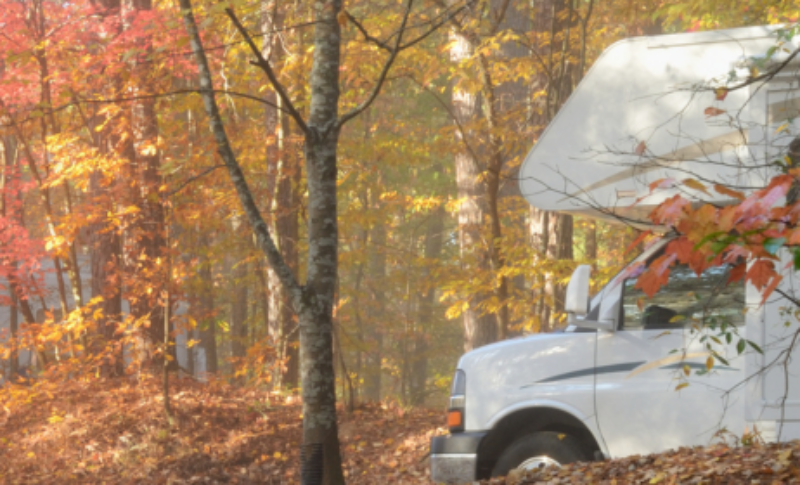
However, the biggest changes are evident in the travel periods. Bookings in both spring and autumn are growing significantly stronger than during the classic summer holidays.
Booking development spring (April to June) compared to the previous year
- Northern Europe: +53 %
- Central Europe: +25 %
- Southern Europe: +18 %
Booking development autumn (September to October) compared to the previous year
- Northern Europe: +47 %
- Central Europe: +5 %
- Southern Europe: +4 %
The traditional holiday countries in Southern Europe particularly benefit from the fact that demand is increasingly distributed across spring and autumn. More pleasant temperatures outside the midsummer months and greater temporal flexibility for many camping holidaymakers make travel to Southern Europe more attractive throughout the entire year.
The holiday map is not shrinking – it is becoming less concentrated
The data thus shows not an abandonment of individual holiday regions, but a stronger temporal and geographical distribution of demand.
“The holiday map is becoming less concentrated temporally. Instead of an extreme concentration on a few summer weeks, we are seeing the development towards a longer camping season. Southern Europe is becoming a year-round travel destination for campers. Holidaymakers benefit from this, as do many tourist regions in Europe,” says Frers.
Method
The analysis is based on anonymized booking data from PiNCAMP for the travel years 2023 to 2026 (as of June 2026).
Three regions were considered for the evaluation:
- Northern Europe: Denmark, Sweden, Norway
- Central Europe: Germany, Austria, Switzerland, Netherlands
- Southern Europe: France, Spain, Italy, Portugal, Croatia
Actual booking data was evaluated for travel periods already completed. For travel periods still to come, the analysis is based on the current booking status and serves as a trend indicator for the current travel year.
The results reflect booking behavior on PiNCAMP and are to be understood as platform trends. They cannot be directly transferred to the entire European camping market.